P3 Pallet3D editorial team8 min readPublished: 10 November 2026
Loading and unloading: process, responsibilities of the parties, and the most common mistakes
Check how to plan loading and unloading, define the parties' responsibilities, document discrepancies, and avoid operational mistakes.
Proper loading and unloading begin before the vehicle is positioned: you need to confirm the cargo data, plan its arrangement and the order of release, determine the scope of each party's tasks, and prepare the method of inspection upon receipt. Placing the goods in the vehicle does not end the operation - before departure, the stability of the arrangement and the applied securing must be assessed, and upon handover, the condition of the delivery and any discrepancies should be recorded.
In this article
The operation plan is based on data about load units and the unloading sequence.
The scope of work involving the goods should be assigned in the order or contract.
The arrangement, securing, and access to the goods require separate inspection before departure.
Seals, the number of units, and visible damage are worth documenting upon handover.
The space plan does not replace assessment of stability, weight, or the method of securing the cargo.
From cargo preparation to completion of unloading
The loading and unloading process is best carried out in a fixed sequence. First, the type of goods, the number of units, dimensions, weight, and type of packaging are confirmed. This data is needed to prepare palletization, choose the arrangement method, and check whether the planned means of transport matches the actual cargo.
Confirmation of cargo data - checking the number of units, dimensions, weight, packaging type, and any requirements regarding the release sequence.
Establishing the conditions of the operation - determining the loading and collection location, available equipment, the people performing the tasks, and the sequence of unloading points.
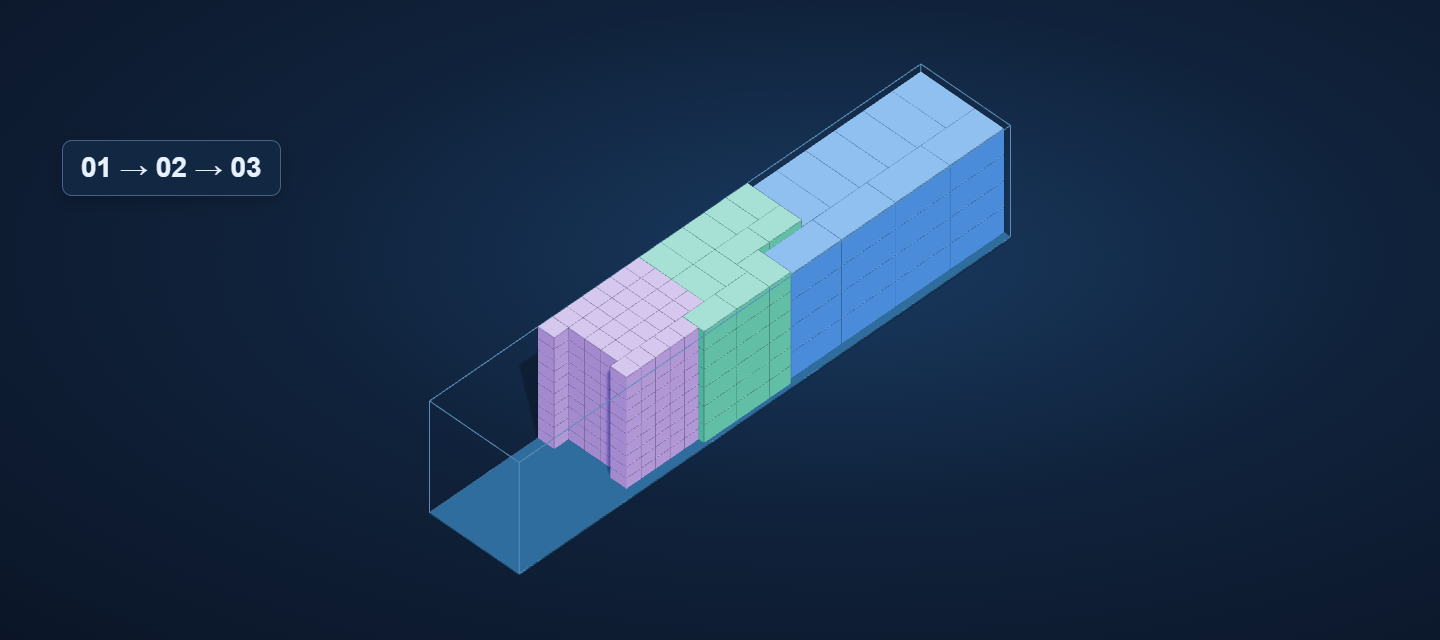
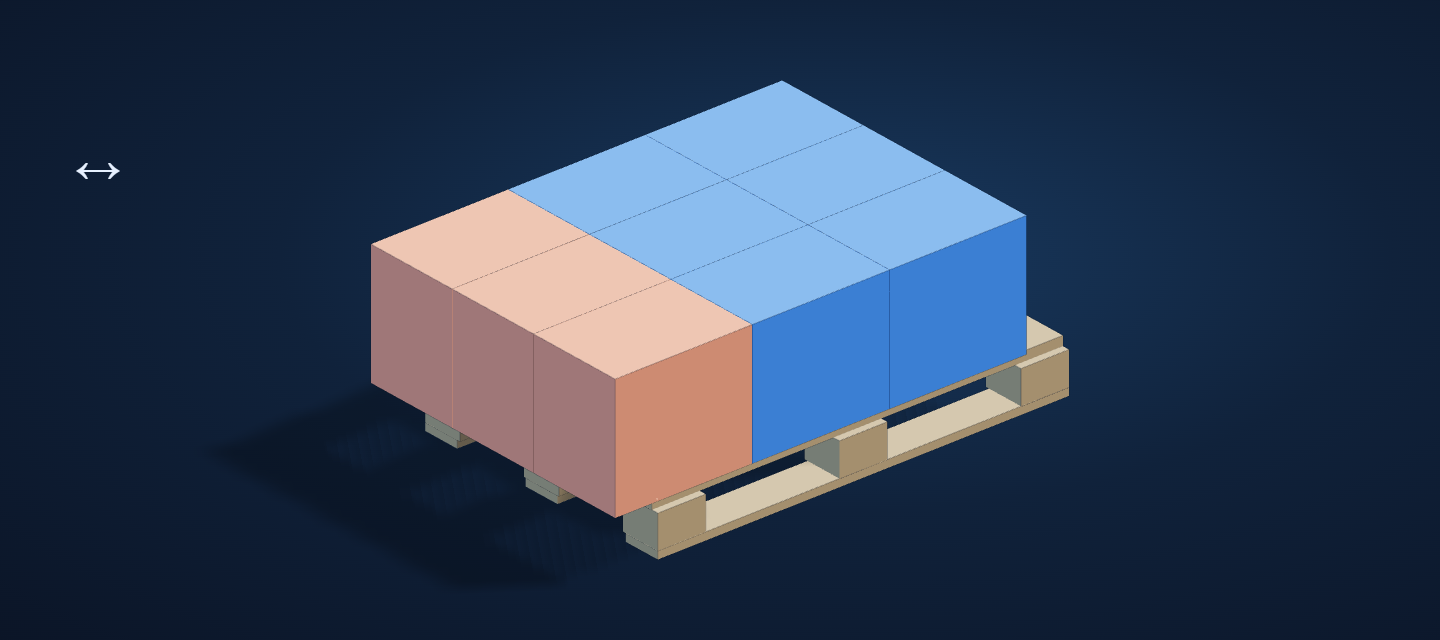
Preparing the arrangement - placing cartons on pallets or pallets in a trailer, container, or other means of transport.
Pre-transport inspection - assessing stability, access to subsequent batches of goods, and the securing used.
Handover of the delivery - comparing the number and condition of the units handed over with the documentation and recording any discrepancies noticed.
The arrangement of the goods and their securing are separate activities, although they should be planned together. The layout may fit within the cargo space and yet make it difficult to access pallets intended for earlier pickup or require a different securing method after the delivery sequence changes.
Any change in the number of pallets, package dimensions, means of transport, or unloading sequence should trigger a re-check of the plan. This makes it possible to catch a discrepancy before work begins, rather than only at the collection point.
Division of responsibilities between the sender, carrier, and recipient
There is no safe rule according to which the driver always loads or unloads the goods, and the sender is always responsible for the entire loading process. The scope of work depends on the conditions of the specific order, the contract, the type of transport, and the organization of transshipment locations. Before the operation, the physical handling of the goods, preparation and arrangement of the cargo, securing, condition control, documentation, and collection should be divided.
Area of operation
What to determine before work begins
Practical purpose of the determination
Preparation of goods
Who confirms the number of units, dimensions and weight data, and readiness of the goods for release.
Reducing the risk of working with outdated data.
Physical loading and unloading
Who performs the tasks, who provides staff for the station, and who makes the necessary equipment available.
Avoiding vehicle downtime due to a lack of people, devices, or access to the ramp.
Arrangement and securing
Who prepares the layout, who performs the securing, and who checks the finished cargo before departure.
Separating the arrangement itself from the control of the risk of shifting and damage.
Acceptance of delivery
Who counts the units, checks seals and visible damage, and where reservations are recorded.
Linking the identified discrepancies to a specific moment of handover.
In international road transport, within the scope of application of the CMR Convention, the carrier's liability should be considered with regard to that convention. Article 8 of CMR concerns the checks carried out by the carrier upon taking over the goods, and Article 17 takes into account, among other things, circumstances related to handling, loading, or unloading performed by the sender or the recipient. Such rules are described in UNECE materials. However, they do not automatically determine who performs a given task in every order or how responsibility for a specific damage is allocated.
CMR is not a universal basis for every domestic transport or every branch of transport. In operational practice, the most important thing is therefore to clearly record the scope of tasks in the contract or order and maintain documentation from release and receipt. In the event of a dispute, the assessment of liability requires analysis of the circumstances of the specific transport.
How to prepare cargo for safe transport
Planning the loading should begin with the units that are actually to be transported. For cartons or rolls, at least the dimensions and weight are needed. For pallets, their arrangement, the possibility of handling them at the loading and unloading location, and access to units intended for subsequent recipients must also be taken into account.
Proper loading of the vehicle is not just about using the available space. It is necessary to check whether the cargo arrangement remains stable, whether the goods will not need to be moved for earlier unloading points, and whether the chosen securing method matches the finished layout. Weight limits, axle loads, stability, and the method of securing require separate confirmation for the specific vehicle, cargo, and transport conditions.
Stacking pallets in transport requires assessing the characteristics of the goods, the strength of the packaging, the stability of the entire arrangement, and the handling conditions. The free height of the cargo space alone is not sufficient grounds for making such a decision.
The transshipment infrastructure should also match the planned operation. Loading docks, handling equipment in transport, and systems used in logistics are selected according to the type of goods and the conditions of the station. Where the nature of the cargo requires it, a lifting device used for transport and transshipment may be needed. Equipment makes the work easier, but it does not replace verification of cargo data or control of the stability of the arrangement.
The most common mistakes during loading and unloading
Starting work without confirming data - dimensions, weight, number of units, or type of packaging may differ from the information used to prepare the plan. The data should be checked before loading.
Planning only by surface area - in addition to floor space, height, stability, unloading sequence, and access to the goods must be taken into account.
Failure to assign transshipment tasks - without prior arrangements, it is not known who is to carry out loading, unloading, securing, inspection, or documentation.
Mismatch between the station and the operation - before the vehicle is positioned, the availability of the ramp, transshipment equipment, and handling conditions suitable for the given cargo should be confirmed.
Skipping inspection of the finished arrangement - after loading is completed, stability and the risk of shifting or damage during transport must be assessed.
Lack of documentation upon handover - failure to record the number of units, seal condition, visible damage, and other discrepancies makes it harder to later determine when the problem was noticed.
A common source of delays is arranging pallets without taking subsequent collection points into account. Goods intended for the first unloading may end up behind other units, which requires additional handling. This increases the scope of work during unloading and the risk of damage when moving pallets.
Example of planning cargo arrangement on pallets and in the means of transport
A company sending cartons on pallets to several recipients should collect the dimensions and weight of the cartons, the number of pallets, data about the means of transport, and the sequence of unloading points before planning. On this basis, the arrangement of cartons on pallets can be prepared, followed by the placement of pallets in the trailer or container.
An example plan still requires operational inspection: pallets for the first recipient should be accessible without unplanned moving of other units, and the entire arrangement must be assessed in terms of stability and the applied securing. It also needs to be confirmed whether the loading and receiving location has the conditions to handle the planned arrangement. The arrangement plan is therefore a starting point for organizing the operation, not an independent confirmation of transport safety.
Summary of the procedure before closing the order
Before departure and upon receipt, go through a short checklist:
Confirm the type, dimensions, weight, and number of load units.
Check the compatibility of the means of transport with the planned arrangement and unloading sequence.
Record who performs loading, unloading, arrangement, securing, inspection, and receipt.
Assess the stability of the finished arrangement and the securing used.
Upon handover, record the number of units, seal condition, visible damage, and other discrepancies.
If a discrepancy appears, describe it at the specific handover, secure the available confirmations, and pass the information to the parties in accordance with the established procedure.
A tool supporting loading planning
Pallet3D is one calculator that runs in the browser. It allows you to enter cartons or rolls with dimensions and weight, arrange them on pallets, and then place the pallets in a trailer or container. The interactive 3D view can make it easier to check the geometry of the plan before the operation begins, but it does not replace confirmation of stability, securing, or the parameters of a specific transport.
Plan your load in 3D
Enter your box sizes and Pallet3D shows the optimal layout in interactive 3D - 5 days free.