Where to start preparing a pallet for transport
Securing pallets in transport begins before the first carton is placed. Check whether the pallet has any visible damage, deformation, cracks, or dampness that could weaken its load-bearing function. Also inspect the unit packages: crushed cartons, compromised closures, or deformed rolls can make it difficult to build a stable stack, even when the external securing looks correct.
Before building the layers, check the box arrangement in the boxes per pallet calculator. For further worked examples, see the guide Pallet overhang - how far may a load stick out?.
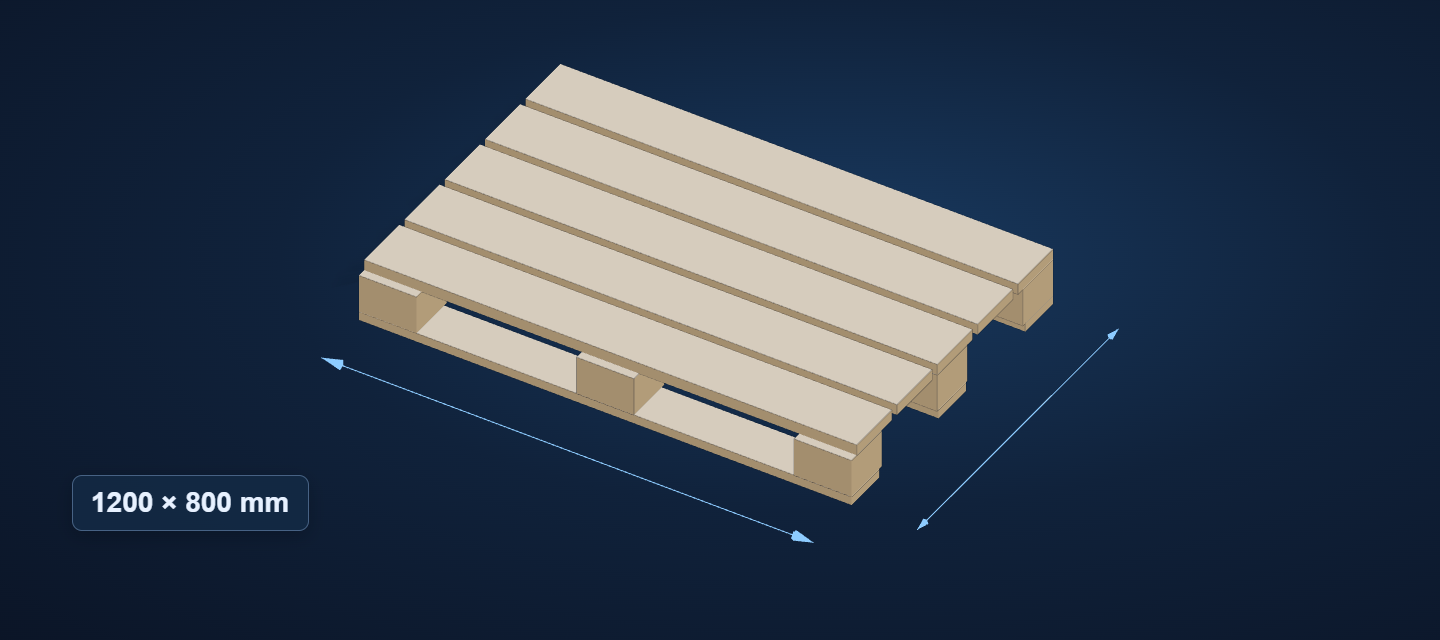
The pallet is selected according to the dimensions, weight, and method of arranging the goods, not solely according to its format. EPAL 1 has dimensions of 1200 × 800 × 144 mm, weighs about 25 kg, and has a safe working load of 1500 kg - these are the parameters of this specific model, data from the EPAL 1 specification and EPAL 2 specification. EPAL 2 has dimensions of 1200 × 1000 × 162 mm, weighs about 35 kg, and has a safe working load of 1250 kg - also only for the EPAL 2 model, data from the EPAL 1 specification and EPAL 2 specification. These values should not be transferred to every pallet of similar dimensions or to any industrial pallet.
Before palletizing, determine which elements are the heaviest, whether the packages can be safely stacked, and whether the shape of the goods promotes slipping or tipping. This information determines the layer arrangement and whether the compact construction of the pallet alone will be sufficient, or whether additional securing measures will be needed.
Choosing the stabilization method for the type of cargo
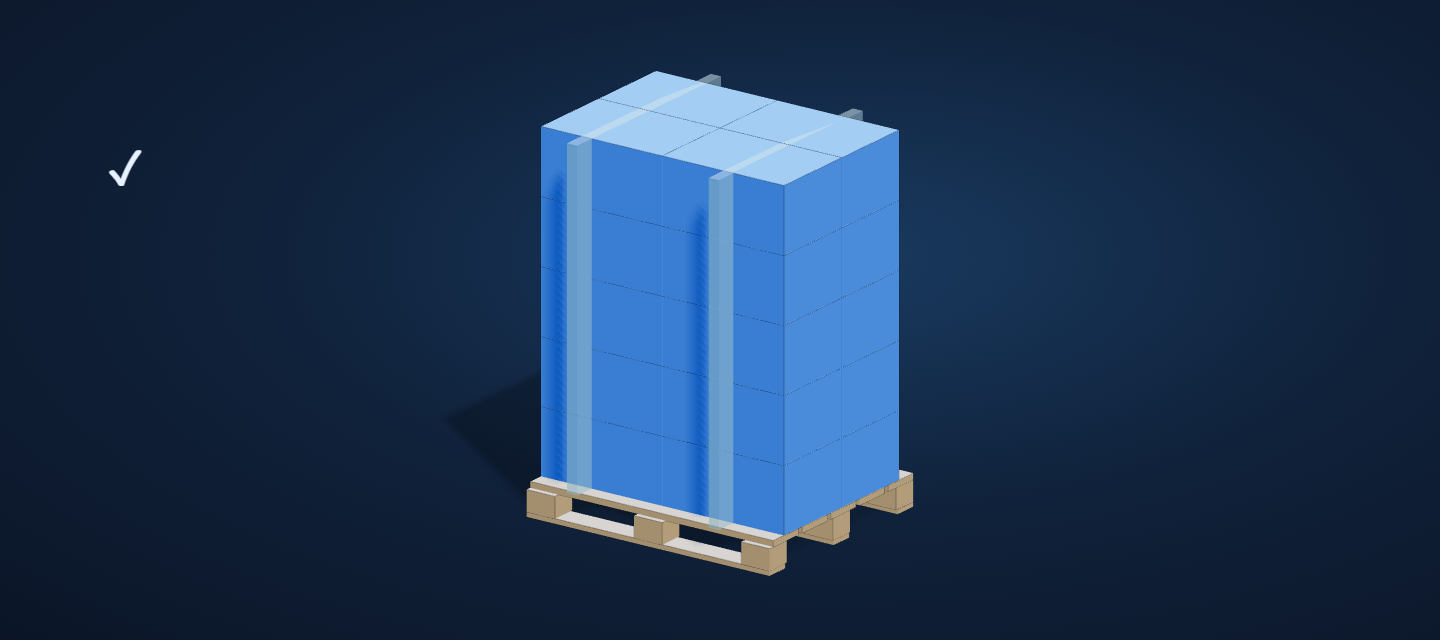
There is no single material that is suitable for every type of goods. The choice depends on the shape of the packages, their susceptibility to pressure and deformation, the height of the stack, the weight of the entire unit, and transport and handling conditions. Stretch film can help combine cartons or other elements into a compact unit. Straps can be used to tie down cargo, and edge protectors to protect edges and distribute the pressure of the strap on the package. However, their use should take into account the strength of the specific goods and how they are packaged.
For cartons with regular dimensions, first check whether the layers shift relative to each other and whether the top of the stack has any slack. For rolls, irregularly shaped packages, or mixed units, it is additionally necessary to assess the contact points and the possibility of rotation or movement of the elements. The securing material should not damage the product, cut the package edges, or mask a problem with an uneven base.
A good criterion is the function that a given measure is intended to serve. If the problem is cartons spreading apart, the unit needs to be consolidated. If the edges of the packaging under the strap are at risk, their protection should be considered. If the pallet may move in the vehicle, a solution is needed that limits the movement of the entire unit, not just additional wrapping of the goods.
Do not determine the number of wraps, straps, or the tension force according to a fixed scheme. Such parameters depend on the properties of the product, weight, geometry, the materials used, and transport conditions. If in doubt, the complete set should be assessed: pallet, goods, arrangement method, and securing method in the vehicle.
Arrangement of the cargo before wrapping and closing the pallet
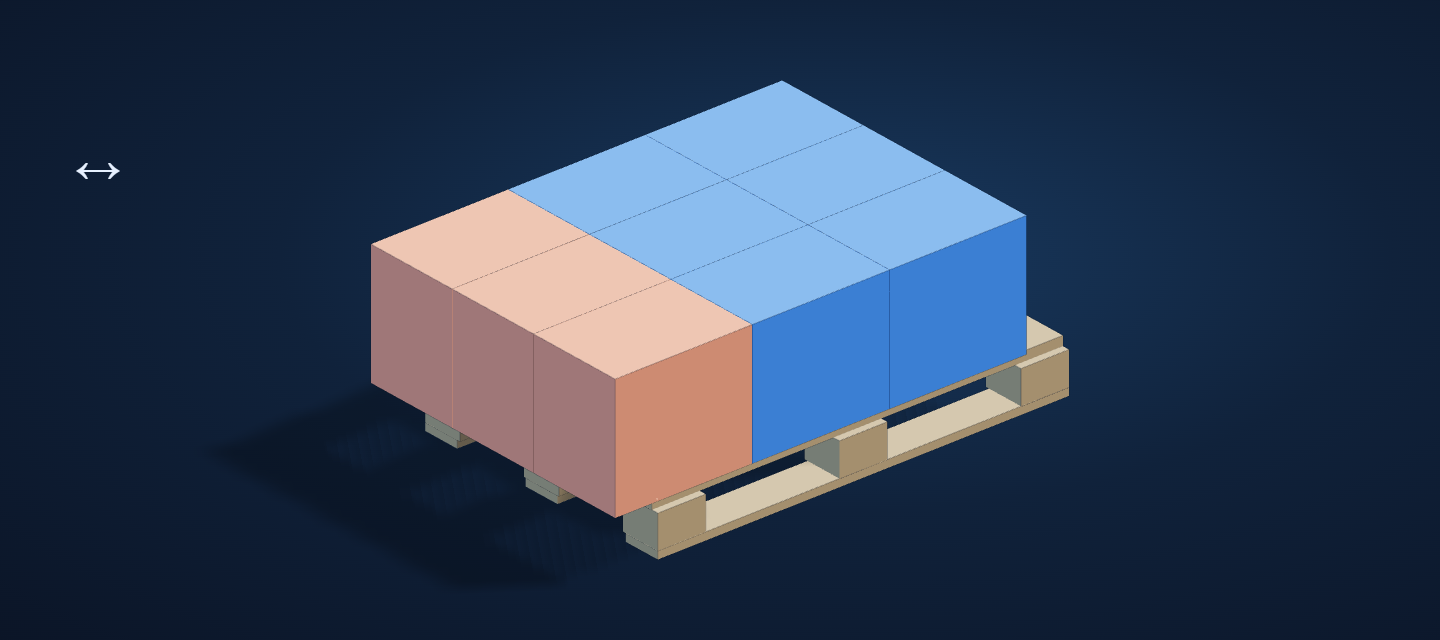
Stability is created primarily by the correct arrangement of the goods. The bottom layer should form as even a base as possible, and successive layers must have real support. Heavier items are usually placed lower and closer to the center of the base to reduce the risk of tipping. A tall or narrow stack should not be treated the same as a low, compact pallet with cartons of regular shape.
Preparing the cargo on a pallet also requires assessing overhang beyond its outline. Not every extension beyond the edge means the same problem, but it can worsen package support, increase susceptibility to impact during handling, or make it harder to later use edge protectors and straps. Loose parcels, uneven layers, and individual elements without support should be removed or rearranged before the unit is closed.
In practice, it is worth following a simple sequence:
- place the goods on the pallet according to their dimensions, weight, and stackability;
- check whether each layer is supported and does not create unstable points;
- assess the height and center of gravity of the entire unit;
- only then choose the means that consolidates the goods with the pallet.
Do not assume that the material used on the outside will fix a faulty layer arrangement. Wrapping or strapping may support keeping the cargo as one unit, but according to the UNECE CTU Code it is an auxiliary measure relative to the cargo's own stability, friction, and proper securing in the vehicle.
Separate securing of the finished unit in the vehicle
A pallet prepared for shipment is not automatically secured for the duration of the trip. The finished unit must be positioned according to the loading plan and its movement must be restricted longitudinally, laterally, and - where required by the arrangement - in other directions. The UNECE CTU Code distinguishes, among other things, blocking, direct lashing, and friction lashing. The choice of solution depends on the cargo, free spaces, vehicle equipment, and the method of transport.
Before closing the cargo space, check whether the pallets are standing on a properly prepared surface, whether there are no spaces that allow movement, and whether the securing means used are matched to the specific configuration. The weight and arrangement of the cargo must also comply with the requirements for the vehicle, including its payload and load distribution. This cannot be assessed based on the film alone, the pallet size, or the visual compactness of the stack.
A strap should not be run over a sharp or unprotected edge that could damage it. It is also necessary to check the condition of the attachment points and the remaining equipment used to block or immobilize the cargo. Any doubt about the strength of an element means the need to apply a solution consistent with the carrier's procedure and the requirements for the given transport.
Final pallet inspection: errors and limitations
The final inspection should not be limited to confirming that the pallet has been wrapped. Verify that the arrangement matches the base dimensions, that the stack is stable, that there are no loose elements, that the packaging is in good condition, and that the securing devices are not loose or damaged. Also check whether the way the pallets are positioned matches the loading plan and does not leave the units the possibility of uncontrolled movement.
Typical mistakes include:
- choosing a pallet without checking its condition and the parameters specific to the given model;
- building a tall stack on an uneven or incomplete base;
- treating stretch film or strapping as a substitute for securing the pallet in the vehicle;
- leaving free space without planned blocking or appropriate securing;
- moving again after partial unloading without assessing the new arrangement of the remaining pallets.
During the route, inspections are carried out according to the loading plan and the carrier's procedure. After reloading, partial unloading, or any other change in configuration, it is necessary to reassess whether the remaining cargo is still properly positioned and immobilized. Changing one pallet can alter the conditions for the entire cargo space.
Checking cargo geometry before choosing securing methods
Before selecting securing measures, it is worth verifying the geometry of the cargo: dimensions, weight, the arrangement of cartons or rolls on the pallet, and the positioning of pallets in the vehicle. Pallet3D allows you to enter cartons or rolls together with their dimensions and weight, place them on a pallet, and check the arrangement of pallets in a trailer or container in an interactive 3D view. Such an analysis supports the assessment of the arrangement, but it does not replace confirmation of weight limits, stability, or proper securing.
First check the geometry of the cargo, then choose securing methods based on the product and transport conditions.
Plan your load in 3D
Enter your box sizes and Pallet3D shows the optimal layout in interactive 3D - 5 days free.
Open the calculator →