P3 Pallet3D editorial team6 min readPublished: 24 October 2026
Transport cost optimization: ways to better fill cargo space
Learn ways to plan pallets and fill space while taking into account weight, stability, and unloading order.
First determine the shipment-limiting data: weight, external dimensions, stackability, and delivery order. The total cost depends on these parameters, the available space, the route, and the scope of handling; better use of the floor does not automatically mean savings. Compare the total cost of carrying out the same shipment and check whether the proposed arrangement remains stable and stays within weight and axle load limits.
In this article
A loading plan requires current data on the dimensions, weight, number, and stackability of packages.
The pallet format changes the possible orientations of cartons and the arrangement of the entire cargo unit.
The means of transport is selected according to geometry, weight, delivery handling, and loading conditions, not just payload capacity.
Free space can only be used after checking stability, access to the goods, and securing.
Comparison of variants should include the total cost, not just the degree of space filling.
Where to start when analyzing transport costs
Transport cost analysis should begin with data on each type of cargo: length, width, height, weight, number of pieces, possibility of turning, and stacking. In the case of mixed shipments, it is worth recording these data separately for each type of carton or roll. The number of packages alone does not allow you to determine how many pallets will be created or how the goods will occupy space in a trailer, container, or van.
In logistics cost optimization, the weight constraint must be separated from the space constraint. A load may still leave weight margin but not fit into a practical arrangement because of its height, base, or irregular dimensions. In another shipment, space may be available, but adding more goods is prevented by weight, load distribution, or securing requirements.
Comparing variants also requires data on the planned means of transport, transfer points, and delivery order. Such a set makes it possible to assess whether a change in package orientation, pallet format, or the arrangement of cargo units is justified. This is a practical starting point for transport optimization, as well as for planning internal transport between the warehouse, production, and shipping area.
Better use of space starts with proper palletization
Arranging cartons on a pallet should be based on the dimensions and weight of the packages, not on the number of pieces. You need to check the base area of the carton, its height, allowable orientation, the possibility of creating successive layers, and the distribution of weight in the cargo unit. An arrangement that holds more packages may not be suitable for implementation if it worsens stability, exceeds stacking capability, or makes securing the goods difficult.
The pallet format determines the surface on which the arrangement is created. The table below shows selected base dimensions used in loading planning.
Pallet format
Base dimensions
EPAL 1
1200 x 800 mm (source: EPAL)
EUR 2
1200 x 1000 mm (source: EPAL)
EUR 3
1000 x 1200 mm (source: EPAL)
EUR 6
800 x 600 mm (source: EPAL)
EPAL 7
800 x 600 mm (source: EPAL)
Changing the pallet format can change the number of cartons per layer, the number of layers, and the arrangement of pallets in the vehicle. However, one should not assume that the base alone describes all the properties of a cargo unit. The term “industrial pallet” refers to a category of applications, not a single mandatory standard. A pallet with a base of 1200 x 1000 mm may be EPAL 2, but it may also differ in construction and parameters. The plan should therefore take into account the data of the specific pallet used in a given operation.
How to plan pallet placement in a trailer and container
After planning a single pallet, the entire means of transport must be assessed. A useful sequence of decisions is: cargo data, pallet format and number, available space geometry, weight, axle loads, transfer points, and unloading method. This helps identify a situation in which a correct arrangement on a pallet is impractical once placed in a trailer or container.
Choosing the transport with the highest payload should not be the automatic answer. When the limiting factor is volume, height, or the irregular shape of the packages, fitting the pallets to a specific cargo space may be decisive. In road transport optimization, variants should be compared in terms of weight and the space actually occupied, as well as the ability to serve subsequent delivery points.
Free spaces between pallets or by the walls can sometimes hold loose packages. They should not be filled just because they are visible in the plan. Additional packages must be assessed in terms of stability, access during unloading, compliance with the delivery order, and the possibility of effective securing. In many cases, leaving some slack is better than an arrangement that is maximally tight but difficult to secure or handle.
Practical loading optimization process
A repeatable process makes it easier to prepare a quote, pass instructions to the warehouse, and compare variants using the same data. Methods of transport cost optimization should concern not only geometry, but also the execution of the plan in the actual operation.
Standardize cargo data. For each package type, record the dimensions, weight, number of pieces, permitted rotation, and stackability.
Select the cargo unit. Check the arrangement of cartons or rolls on a specific pallet, taking into account height, stability, and weight distribution.
Select and compare transport variants. Arrange pallets in the available space of a trailer, container, or van, and then compare arrangements of mixed formats and the possible use of free spaces.
Verify operational constraints. Check weight, axle loads, stability, access to individual deliveries, transfer points, and the required cargo securing.
Compare the total cost. Assess not only the occupied volume, but also the number and type of cargo units, warehouse handling, the unloading process, and the risk of plan changes during execution.
Keep the approved plan. An operational document for the warehouse and carrier reduces discrepancies between the prepared variant and the actual loading.
This process helps separate improved use of geometry from claims of financial savings. A better arrangement may create conditions for a more favorable transport variant, but by itself it does not determine the final cost. The result depends on the conditions of the specific shipment and the way it is executed.
Most common planning errors and limitations
The basic mistake is planning solely on the basis of dimensions. The weight of the packages affects weight distribution, the stability of the cargo unit, stackability, and placement in the vehicle. For this reason, dimensional and weight data must be analyzed together.
The second mistake is treating all pallets of the same format as identical. This applies especially to pallets generally described as industrial and to pallets with a base of 1200 x 1000 mm. The name and base dimensions do not replace data on the construction or parameters of the specific pallet used in the shipment.
Risk also arises when the plan ignores the route and unloading order. A pallet intended for earlier release should not be inaccessible behind goods for a later recipient. Similarly, a layout that is correct in visualization does not replace separate verification of weight limits, axle loads, stability, and the securing method under real transport conditions.
When to use loading visualization
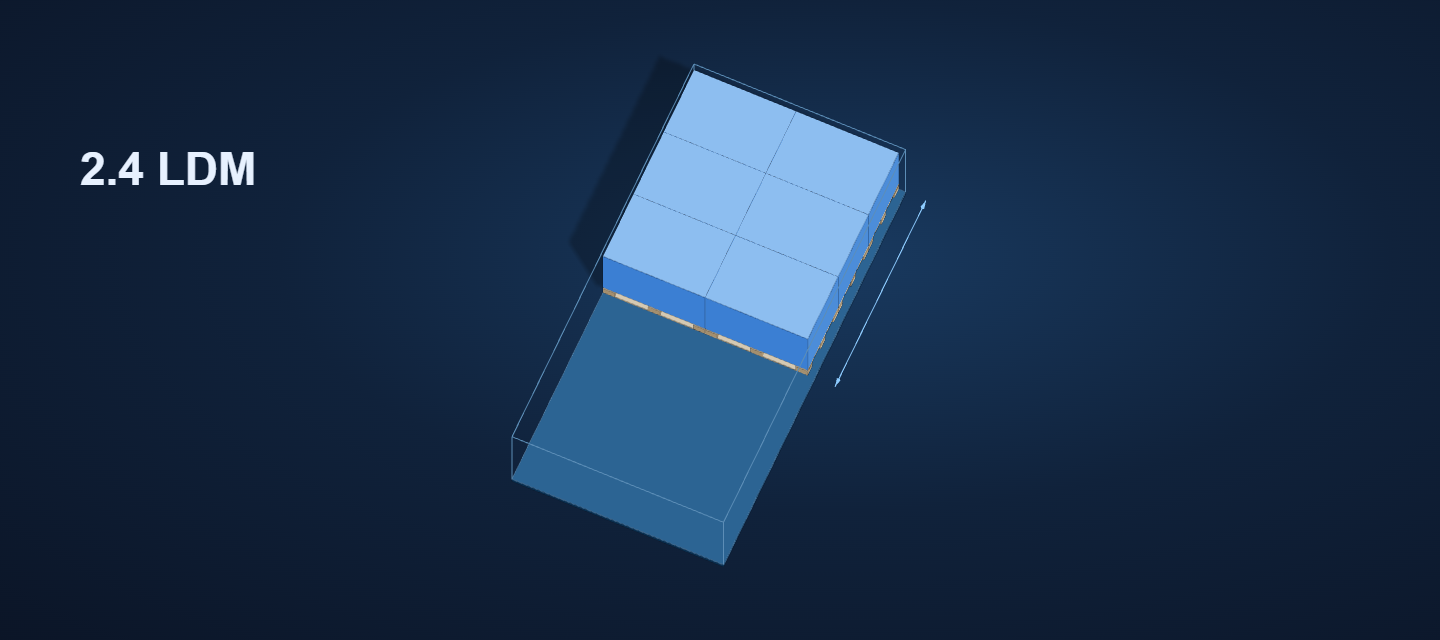
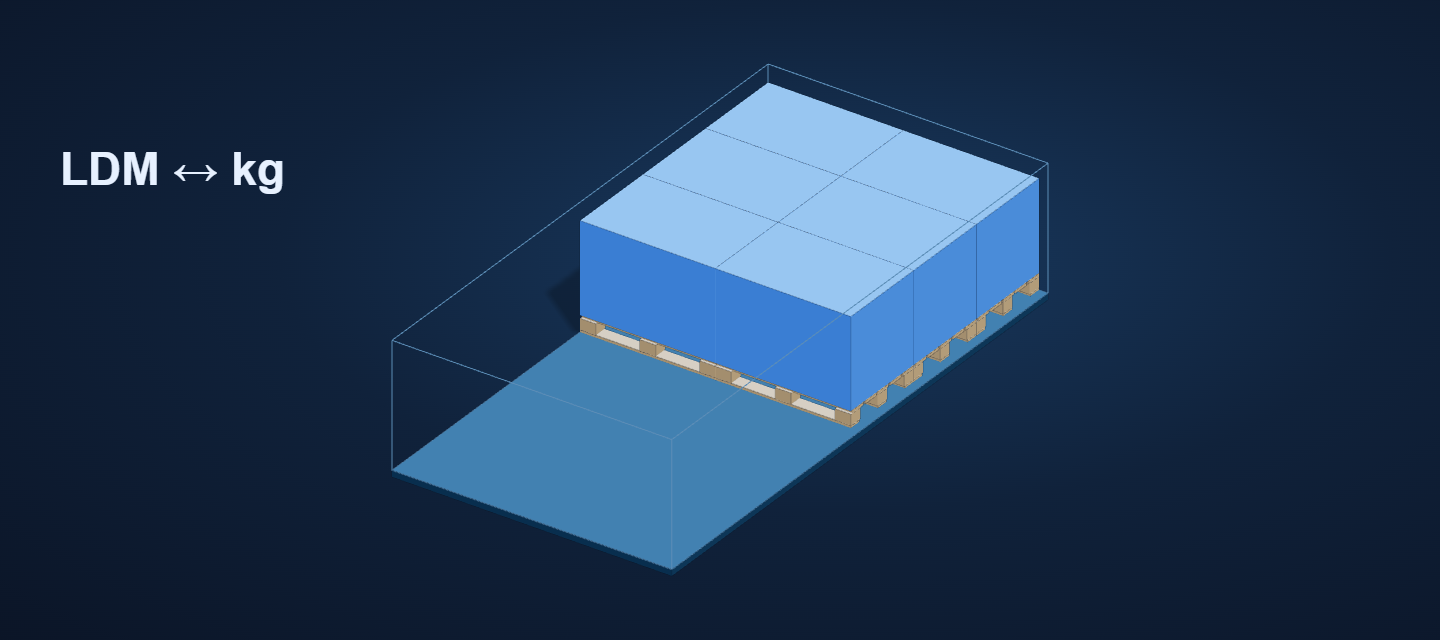
Visualization helps compare palletization and cargo placement variants before passing the plan to the warehouse or carrier. Pallet3D works in the browser without installation: you can enter cartons or rolls with dimensions and weight, arrange them on pallets, and place pallets in a trailer, container, or van. The result is available in an interactive 3D view, and the plan can be exported to PDF. Visualization supports the assessment of geometry, but it does not replace confirmation of weight limits, axle loads, stability, or cargo securing.
Plan your load in 3D
Enter your box sizes and Pallet3D shows the optimal layout in interactive 3D - 5 days free.