P3 Pallet3D editorial team6 min readPublished: 30 June 2026
How to optimally load a trailer and container
How many pallets fit in a trailer and a 40" container, how to distribute weight across the axles, and how to avoid empty space.
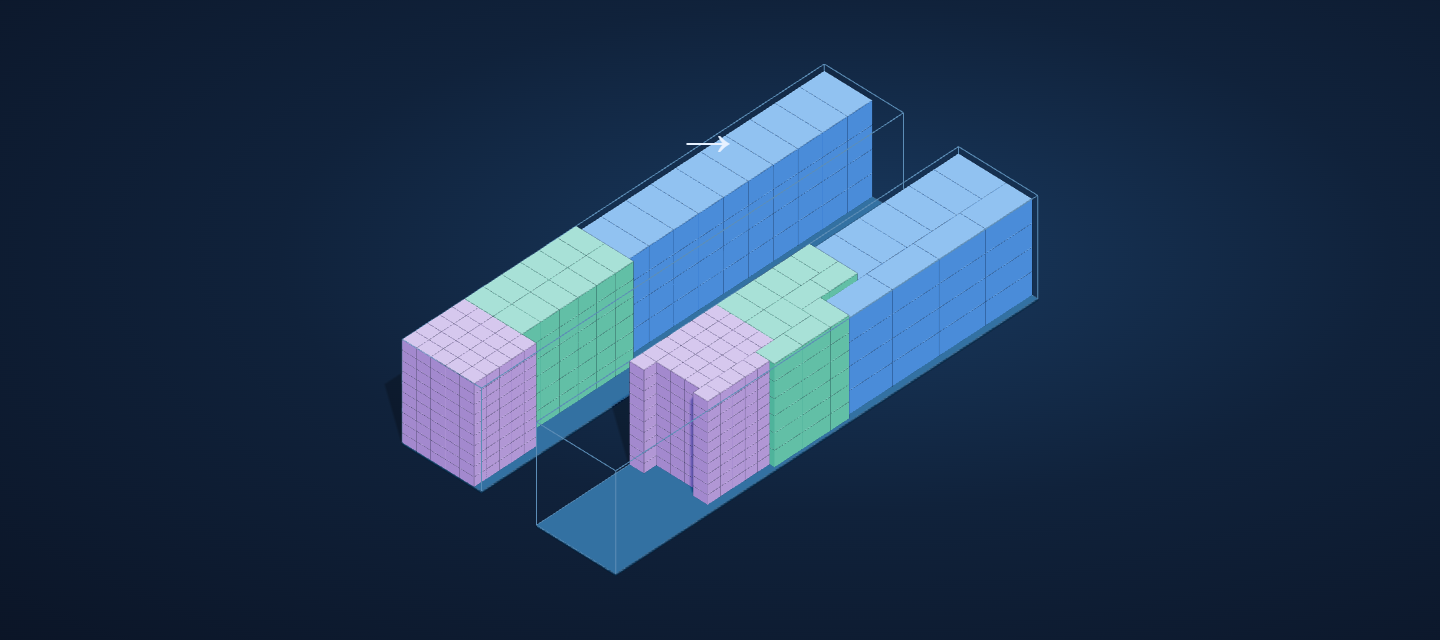
A well-planned load means fewer trips, a lower transport cost per unit, and safer goods. In this guide we show how many pallets fit in a trailer and a container, how to distribute the weight across the axles, and how to eliminate empty space.
In this article
How many pallets fit in a standard trailer?
How many pallets fit in a container?
Weight distribution across the axles
How many pallets fit in a standard trailer?
A typical curtain-side trailer has a load space of about 13.6 m long × 2.45 m wide. That allows you to position:
If the height and weight of the goods allow double-stacking, the number of pallet spaces doubles - that's the simplest way to increase trailer utilization.
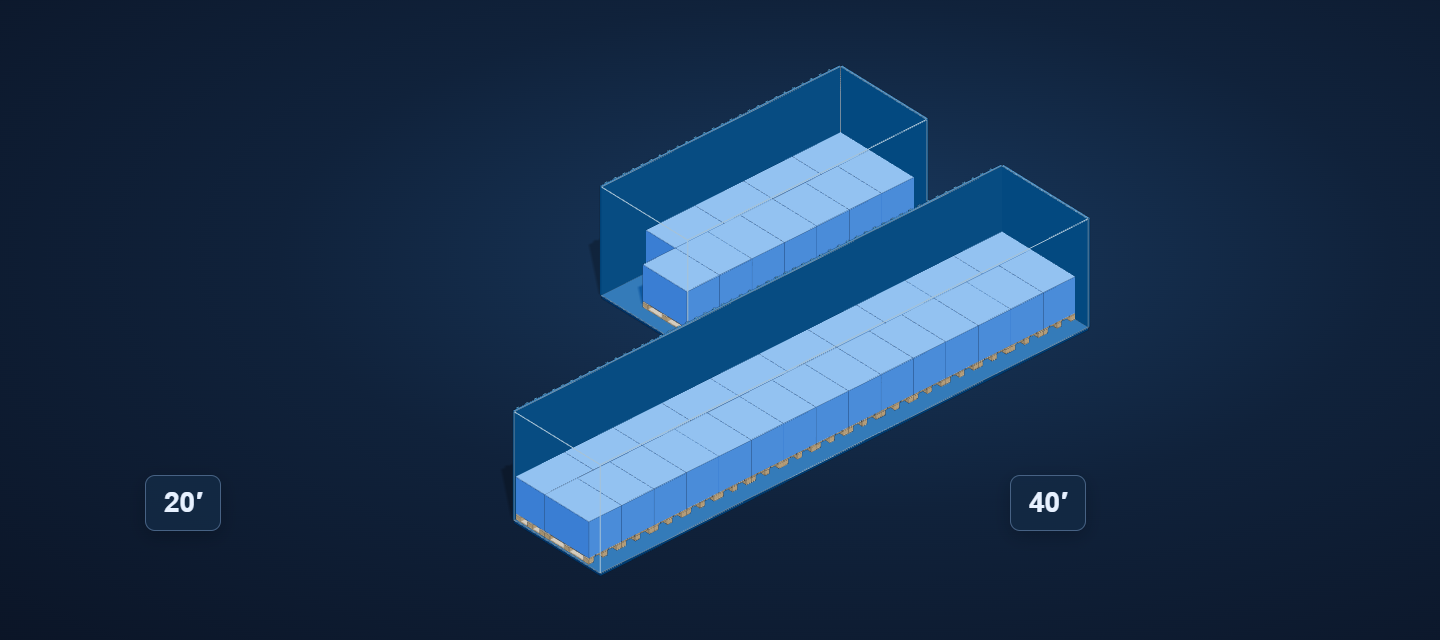
How many pallets fit in a container?
Container
EUR pallets
1200×1000 pallets
20' (approx. 5.9 × 2.35 m)
approx. 11
approx. 9-10
40' (approx. 12.0 × 2.35 m)
approx. 23-24
approx. 20-21
The container's bottleneck is its 2.35 m width - two EUR pallets placed lengthwise (2 × 800 mm) leave a free strip that is worth filling with loose parcels.
Weight distribution across the axles
The number of pallets isn't everything - where you place the heavier goods matters too:
Heavier pallets closer to the center and over the axles, lighter ones at the ends.
Avoid concentrating mass on one side - it risks exceeding the axle load.
In a container, distribute the weight evenly along the entire length to avoid overloading one end.
How to avoid empty space
Mix sizes wisely - larger and heavier items on the bottom, smaller ones fill the gaps and the upper layers.
Use the leftover strip along the width - loose parcels instead of air.
Plan double-stacking wherever the goods and the height allow it.
Calculate first, then load - a 3D simulation reveals empty spaces before they show up at the loading dock.
Tip
All the figures above are approximate values for an ideal arrangement. The real layout depends on the dimensions of your goods - which is why it's worth simulating it before loading.
Plan your trailer and container load
Pallet3D arranges pallets and parcels in the trailer and container in 3D and shows the fill rate. Try it free for 5 days.