P3 Pallet3D editorial team6 min readPublished: 19 October 2026
Maximum height and weight of a loaded pallet
Check the EPAL 1 parameters, working load and the rules for assessing the height of the unit and the entire vehicle before transport.
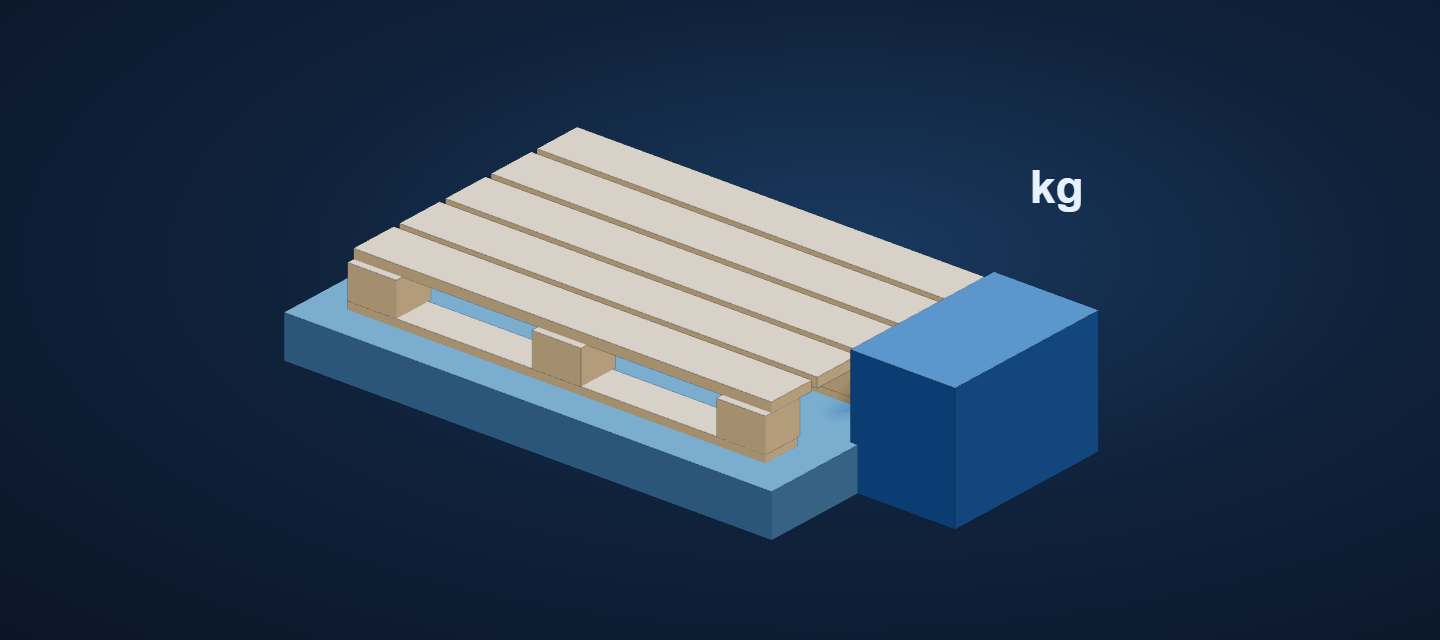
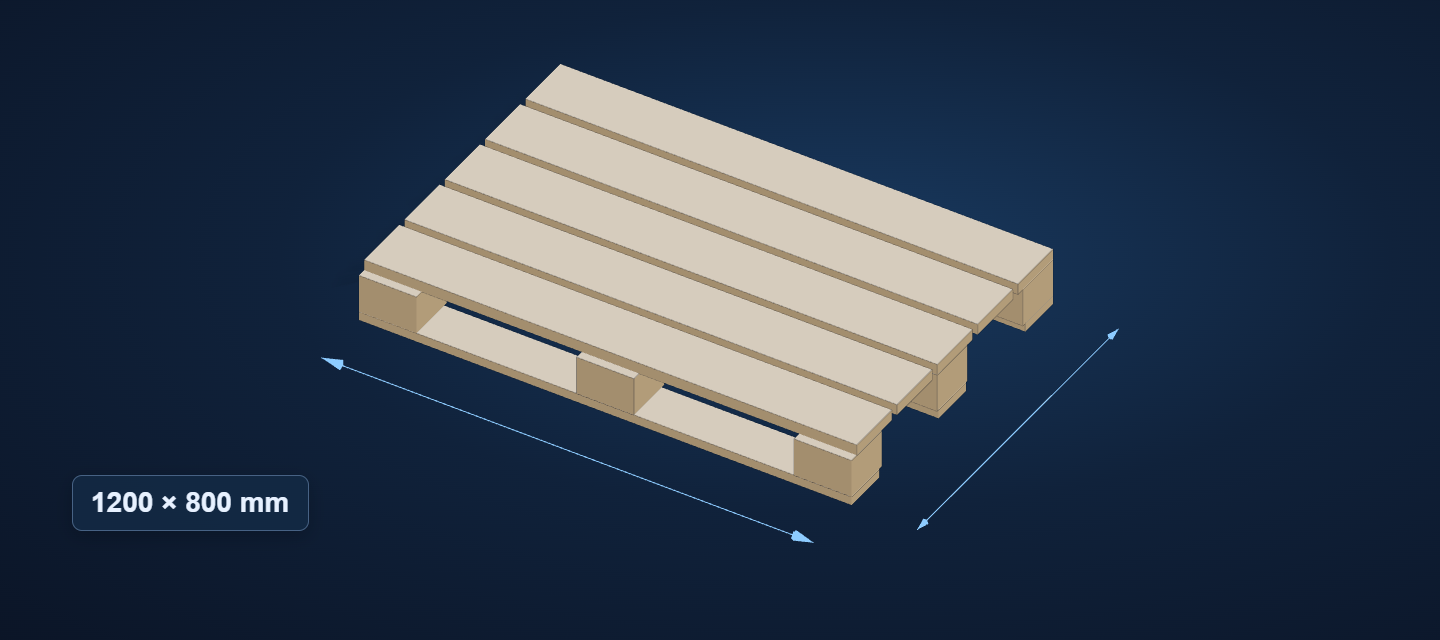
The EPAL 1 pallet has dimensions of 1200 × 800 × 144 mm, an empty weight of about 25 kg and a safe working load of 1500 kg according to the EPAL specification. These are the parameters of the pallet itself; the gross weight of the unit also includes the goods, packaging and securing materials, and its height must be assessed separately.
In this article
EPAL 1 has a working load of 1500 kg with evenly distributed cargo.
Gross weight includes the goods, packaging and the pallet’s own weight.
The height of the finished unit depends on its stability and transport conditions.
The 4 m limit in Poland applies to the entire vehicle with cargo.
Storage rules should not be automatically transferred to transport.
EPAL 1: dimensions, weight and working load
The values below apply only to the EPAL 1 standard. They must not be transferred to every pallet of a similar format.
Must be added to the gross weight of the shipment.
Safe working load
1500 kg - source: EPAL Polska and EPAL Europe
Applies to properly distributed cargo on EPAL 1.
The pallet format is not enough to assess its parameters. A pallet with a base of 1200 × 800 mm may have a different construction, technical condition and properties than EPAL 1. For this reason, the values assigned to EPAL 1 should not be automatically transferred to other pallets.
What determines the height of a loaded pallet
The maximum height of a pallet with goods cannot be stated with a single number for all shipments. Its allowable level is determined simultaneously by: stack stability, the strength of the pallet and packaging, the distribution of weight, available equipment and transport conditions. A unit that fits into the cargo space is not automatically properly prepared for lifting and transport.
The total height is measured from the ground to the highest point of the finished unit. Therefore, the load height must include the 144 mm height of the EPAL 1 pallet - source: EPAL technical data sheet - as well as all elements located above the goods or below them, if they affect the unit’s dimensions.
The most problems are caused by a high load on a relatively small base, unevenly loaded layers and lower packaging that may not withstand the pressure. Heavier items should be arranged so as not to concentrate the weight on a small area and not to shift the center of gravity toward the edge of the pallet. It is also necessary to assess whether the packaging in the lower layers will support the subsequent layers without deformation.
In the HSE PM15 guidelines for controlled storage, the need to assess the height, strength and stability of the stack and the limit of six times the narrowest dimension of the pallet is indicated - source: HSE PM15. This is a reference point for storage under controlled conditions, not a universal transport limit. It should not be used as the basis for determining the permissible height of every pallet sent by road.
Pallet height and the limit for the entire vehicle
In road transport, not only the height of the pallet matters, but the height of the entire vehicle with cargo. In Poland, the height of the vehicle together with the load must generally not exceed 4 m. The limit results from Article 61(10) of the Road Traffic Act; it applies to the entire vehicle with cargo, not to the pallet itself. This value does not define the maximum height of the pallet unit itself.
When assessing it, the height of the vehicle floor, the pallet, the load and any securing elements must be taken into account if they increase the dimensions of the set. Regardless of the general legal limit, a lower restriction may result from the type of transport equipment or the conditions of a particular shipment. Therefore, before preparing a shipment, the limits given in the order should be collected and compared with the actual dimensions of the finished unit.
Height cannot be assessed solely through the prism of free space above the pallet. A high or narrow stack requires a separate assessment of stability during lifting, movement and transport. The problem may be not only exceeding the dimensions, but also tilting or shifting of the load.
How to check a pallet before shipping
Determine the pallet type and confirm its dimensions and permissible load for the specific standard or construction.
Measure the height of the finished unit from the ground to the highest point of the load, including elements affecting its dimensions.
Calculate the gross weight as the sum of the goods, packaging and the pallet’s own weight.
Compare the load weight with the pallet’s working load, and the gross weight with the limit indicated for transport.
Assess the weight distribution, the condition and strength of the packaging, and the stability of the entire stack.
Check the compliance of the unit’s height and geometry with the transport equipment conditions and the transport order.
How to calculate the gross weight of a unit
The gross weight of a pallet unit is the sum of the weight of the goods, all packaging, the pallet itself and any securing elements. This value is compared with the limits of the specific vehicle and the transport order. The pallet’s working load applies to the cargo placed on the carrier; it should be assessed separately according to the parameters of the confirmed pallet type.
Most common mistakes when determining height and weight
Treating 1500 kg as the universal load capacity of every pallet instead of the EPAL 1 parameter for properly distributed cargo.
Omitting the approximately 25 kg empty weight of EPAL 1 when calculating gross weight - source: EPAL technical data sheet.
Assuming that a pallet of the same format has the same construction and parameters as EPAL 1.
Measuring only the goods, without adding the height of the pallet and the elements increasing the unit’s height.
Taking the 4 m limit for the vehicle as the maximum height of a single pallet.
Transferring controlled storage rules directly to transport.
Checking free space in the vehicle without assessing stability, weight distribution and packaging strength.
Checking the pallet arrangement before ordering transport
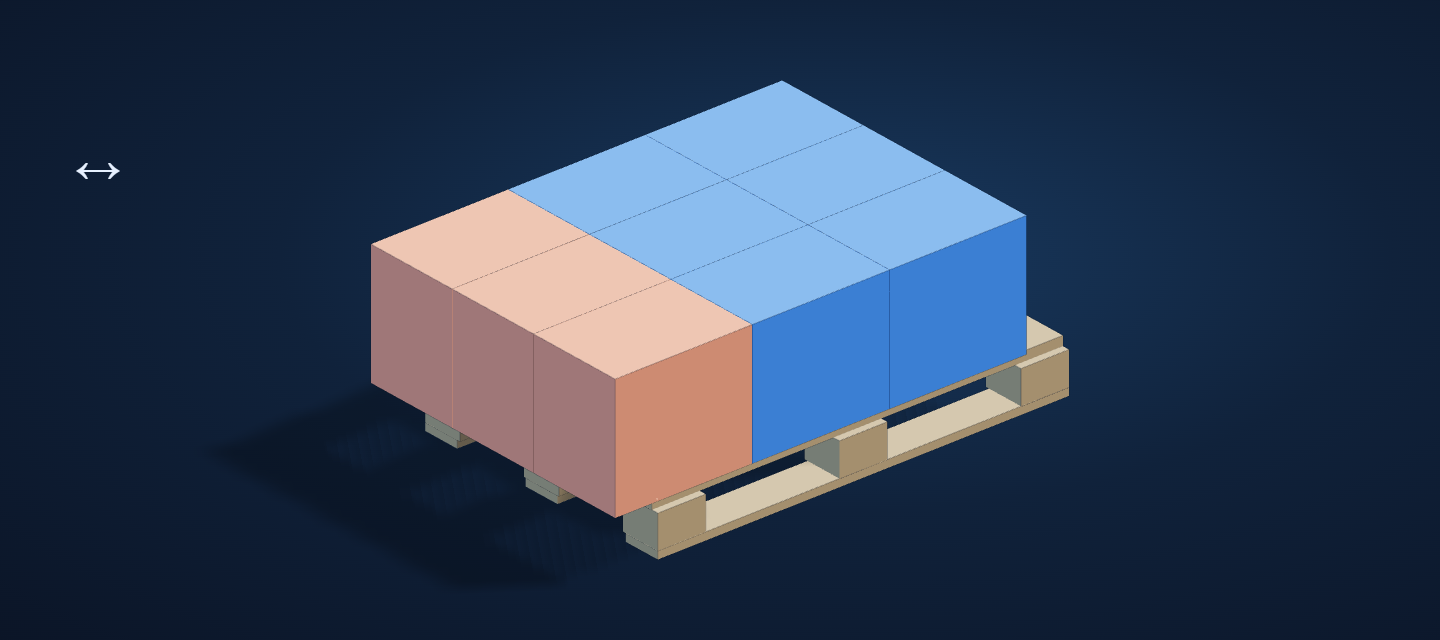
After collecting the order limits, the height and geometry of the arrangement can be checked in Pallet3D. The tool allows you to enter boxes or rolls with dimensions and weight, arrange them on a pallet and view the result in an interactive 3D view. Such analysis supports the assessment of the geometry of the arrangement, but it does not replace confirmation of weight limits, stability, securing or transport requirements.
Plan your load in 3D
Enter your box sizes and Pallet3D shows the optimal layout in interactive 3D - 5 days free.